 English

 New goods

Description
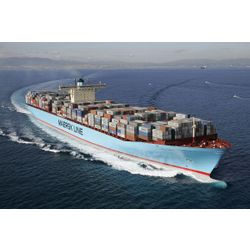
Container transportations today are one of the most popular types of cargo delivery, since they combine a number of advantages:
* speed;
* profitability;
* security.
The high speed of cargo delivery is achieved due to the use of all types of transport during the transportation of the container:
* railway;
* sea;
* Automobile.
Economic efficiency of cargo transportation is ensured by eliminating unnecessary stages of loading and unloading. Your cargo, placed in a container at the point of departure, will stay in it until the destination.
Such a journey guarantees your goods and complete safety. Thanks to special fixing schemes, the load is firmly fixed in the container, which allows to avoid accidental damage.
In addition, you can be sure that the goods transported in a sealed container will remain in full immunity.
Depending on the volume, weight and type of cargo for container transport, different types of containers are used.
The largest distribution in the delivery of goods received universal large-tonnage containers:
* 20-foot container (20 'DC) - suitable for transportation of heavy loads of small dimensions.
* 40-foot container (40 'DC), as well as its modified "high" version (40' High Cube DC) is best used for carrying light, but voluminous cargo.
Loose, liquid, gaseous, requiring a special temperature regime and other goods are transported in specialized cargo containers.
1. Standard container (Dry Cube) - a 20- or 40-foot container for the carriage of goods of a wide range of goods in road, rail, sea and air transport. Due to its design, it can easily be overloaded from one vehicle to another, thus avoiding unnecessary stages of loading and unloading goods.
2. A refrigerated container or a refrigeration container (Reefer Container) has a special refrigeration equipment capable of maintaining a constant temperature inside the container in the range from -25 C to +25 C. Thanks to this feature, the refcontainer is ideally suited for the transport of perishable goods or materials that require special temperature conditions storage. In particular, refrigerated containers are used to transport food products, such as meat, fish, frozen foods, fruits, vegetables, as well as various drinks.
3. The insulated (isothermal) container (IN), in contrast to the refcontainer, does not have refrigeration or heating equipment. The constant temperature in it is maintained by thermal insulation, since the walls, floor, roof and doors of the container are covered or made of heat-insulating material that prevents heat exchange between the inside contents of the container and the outside world.
4. A tank container or a tank container (Tank Container) has in its design two basic elements - a tank and a frame. Frame elements allow you to easily overload the container for a variety of modes of transport. The presence of the tank makes it possible to transport liquid, bulk and gaseous loads therein. The tank-container tank is equipped with a special drain-filler armature, and its internal surface is processed so that it can transport even food products (for example, oil, honey, etc.).
5. The container with open top (Open Top), as can be understood from the name, differs from the standard container in that it does not have a roof. This feature allows you to install in it an oversized cargo, which in its height can not enter the general-purpose container. Since the "open top" can carry heavier loads, its floor is often covered with boards. In addition, for convenience of loading the doors of such a container can be removed. To protect the cargo from external influences, the "open top" is sometimes covered with a special cover made of tarpaulins or plastic.
6. The Flat Rack is a platform that is equipped with upper and lower corner fittings. Sometimes the "flat rack" is equipped with end walls that can be folded. This container design allows transportation of loads in it that require vertical or lateral loading and whose dimensions can not accommodate a conventional container.
Similar products


Delivery of goods of small and large volumes from Russia to China and the countries of the Middle East - logistics, support, preparation of an export deal.
- Vendor code
- 3917
Price Price on demand


Container transportation for oversized, fragile and valuable goods
- Vendor code
- 55904
Price Price on demand

Container transportations from St. Petersburg across Russia - to Moscow, Vladivostok
- Vendor code
- 10361
Price 52.1 USD