 English

 New goods

Description
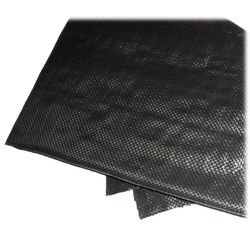
Polypropylene mesh is a construction material produced by extrusion of polypropylene and has found its wide application in the reinforcement of concrete, cement and asphalt layers for the construction of the sidewalk, the road, the local area, as well as large areas of open and closed. Polypropylene mesh increases durability, prevents shrinkage and surface cracking on it.
The advantages of geogrid polypropylene "Geoflex"
+ Geogrid at the stratum of any design reduces the layer of backfill stone, sand, gravel, peat or other granular materials almost in half. At 40% savings met the requirements of the project for the construction stability, since the geogrid is used to reinforce the formations regardless of the level of weakness of the grounds.
+ In the production of our geogrids are laid in polymer additives, due to which the resistance of the geonet
to chemical attack in acid soils, which in Russia is most to be much higher.
Unlike other polymeric counterparts, reinforced with polypropylene mesh resistant to all chemicals, including acids and alkalis. Mesh of polypropylene yarn is also not decomposed by bacteria and other organisms in the soil. However, it has one drawback — it is sensitive to ultraviolet radiation, which can lead to a rapid loss of strength of the material.
The advantages of polypropylene geogrids before materials from fiberglass raw material is of high elasticity. Thanks to this reinforcing polypropylene mesh can withstand high dynamic loads.
Characteristics
- Cell size, mm
- 37±7
- Roll length, m
- 50±0,5
- Cell skew, deg.
- ±3
- Elongation at maximum load,%, not more:
- 15
- Surface density, g / m2
- 300-570
- Maximum load during tensile tests, kN / m, not less:
- along 20-45, across 20-45
- Tensile load at a relative elongation of 2%, kN / m, not less:
- along 5-14, across 7-16
- Tensile load at a relative elongation of 5%, kN / m, not less:
- along 10-26, across 13-26
- Roll width, cm
- 400±5%